
Inside a Termite Mound: The Hidden System That Helps a Colony Breathe |
Behind those earthy walls lies a network of channels that researchers are studying with airflow sensors, X-ray scans and laboratory models. |
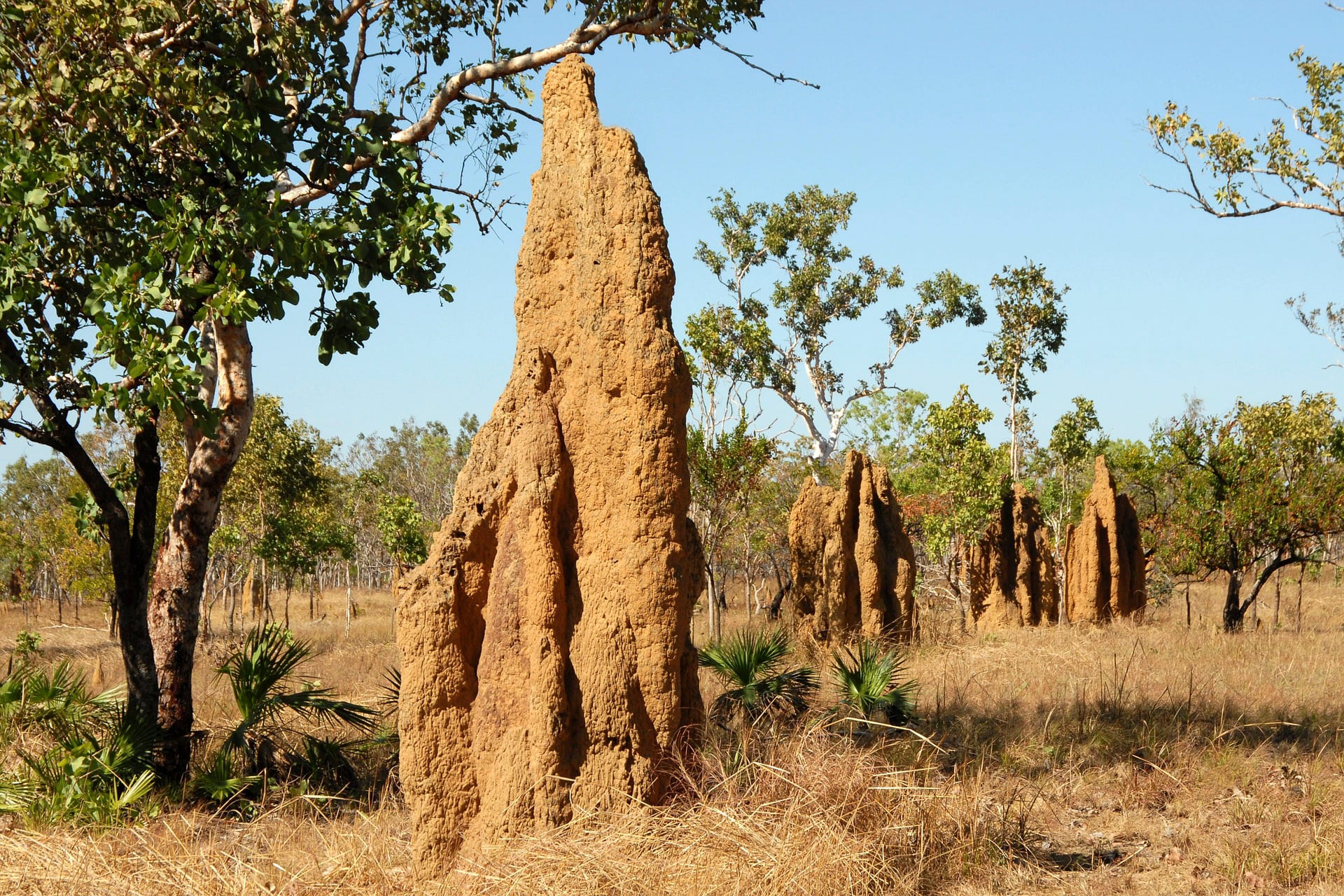
A termite mound can look like a solid heap of earth. Inside, it may contain a branching network of passageways that helps exchange air between the colony and the outside world.
Some mound-building termites cultivate fungi for food. The insects and their fungus gardens need oxygen and produce carbon dioxide, creating a ventilation challenge inside a structure made largely from soil. The mound helps manage that exchange.
Its shape is doing work that is difficult to see from the outside.
How a Mound Uses Day and Night
In a 2015 study, researchers measured airflow, temperature and carbon dioxide in mounds built by the termite species Odontotermes obesus.
They found that the thinner outer channels heated up more quickly during the day than the deeper central structure. The temperature difference drove air upwards through the outer channels and down through the centre.
At night, the outer sections cooled faster, reversing the circulation. This movement carried carbon dioxide towards the porous mound walls, allowing it to escape. Harvard described the system as resembling a slowly breathing lung, powered by daily temperature changes.
The mound used something unavoidable: the difference between day and night.
The Tiny Channels Have Their Own Secrets
Another investigation examined the mound’s outer structure more closely.
For research published in 2023, scientists examined material from a mound built by Macrotermes michaelseni in Namibia. CT scans revealed a highly branched network of curved channels, some as narrow as half a centimetre.
Researchers then tested how movement through such networks could help exchange air.
Their experiments included a three-dimensional copy of the structure and transparent, two-dimensional models. A loudspeaker generated back-and-forth air movements in one experiment; fluorescent dye helped reveal fluid movement in another.
Under particular combinations of channel geometry and oscillation, the networks generated turbulence that increased transport through them. Small movements could therefore produce a useful exchange across the structure.
The channels’ arrangement mattered, not simply the presence of holes in a wall.
Scientists Are Still Looking Inside
No single ventilation explanation applies to every termite mound. Species, mound architecture and environmental conditions differ, and researchers are still investigating how these factors work together.
An October 2025 review in the Journal of the Royal Society Interface examined how X-ray imaging and computer simulations could help answer those questions.
The approach combines detailed views of internal structures with models of how air moves through them. The authors identified continuing gaps in understanding how mound properties contribute to ventilation and temperature regulation.
That leaves plenty to discover inside something people might otherwise walk past.
An Idea Worth Borrowing
The architectural possibilities have already attracted human attention. Eastgate Centre in Harare, opened in 1996, drew inspiration from termite mounds for a design combining thermal mass, shading, ventilation shafts and fans.
Engineering firm Arup describes how those features reduce reliance on energy-intensive air conditioning. The building borrows ideas from nature rather than reproducing a mound’s workings exactly.
The Bottom Line
The mound’s most impressive feature is hidden: a network whose shape helps turn changing conditions into moving air.
What looks like an earthy tower is also part of the colony’s breathing system, with details so fine they'd make scientists reach for a CT scanner. |
More from Joburg Insider

Nov 3, 2026
One Binder, Clear Steps, Useful Information
One binder, clear sections and a few essential pages can help your family find important information when you cannot guide them.

Nov 3, 2026
Prepare Before Bringing a Pet Home
A home inspection, permission to keep pets and introductions to existing animals form part of finding the right match.

Nov 2, 2026
A Chance to Earn the Green and Gold
Two Bulls players are among the uncapped selections in Rassie Erasmus’s squad for November’s Nations Championship Tests.

Nov 2, 2026
Find Your Place in Local Community Action
Find practical ways to support your Johannesburg neighbourhood through residents’ associations, organised community action and better municipal fault reporting.
0 Comments
Join the conversation
Be the first to comment
Share your thoughts above.