
Look Up This Weekend: The Moon Has a Starry Companion |
South African skywatchers can follow the Moon towards Pollux, with Johannesburg’s viewing opportunity beginning after midnight on 1 November. |
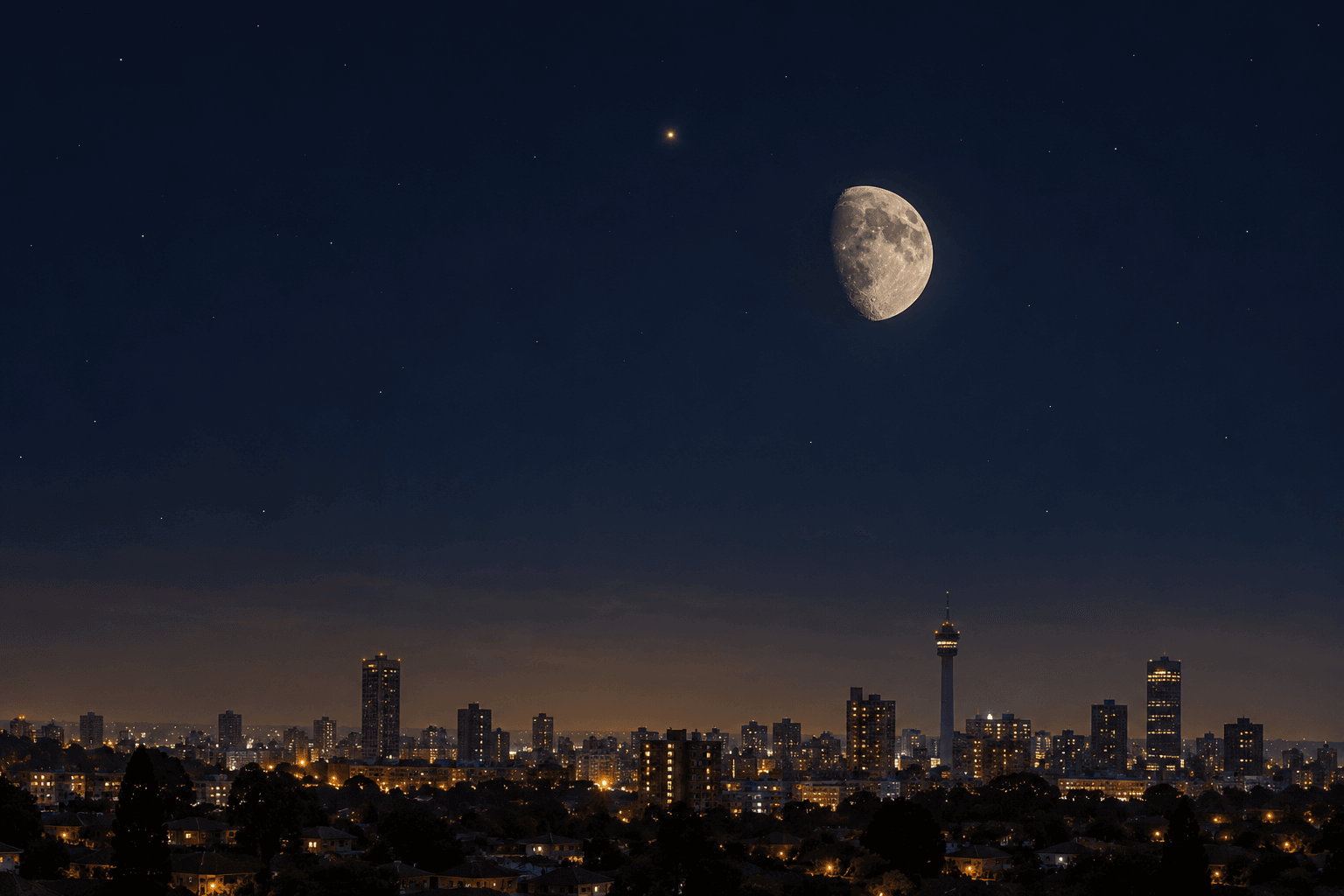
You do not need a telescope to enjoy this weekend’s sky. The Moon will appear near Pollux, the brightest star in the constellation Gemini, giving observers a recognisable pairing to look for.
The encounter is listed for 31 October 2026, but local rising times determine when it becomes visible. Across Africa, the viewing opportunity extends into the early hours of Sunday, 1 November.
When to Look in Johannesburg
Johannesburg’s Moon rises at approximately 00:12 on Sunday, 1 November, towards the east-northeast.
Allow time for it to climb above buildings, trees and the horizon. A practical viewing window is around 01:00–04:00 SAST, based on that rising time, as the Moon gains height through the early morning.
When and Where to Look
Times differ elsewhere in South Africa. Check your town’s moonrise before setting an alarm.
What Is Pollux?
Pollux is the brightest star in Gemini, the constellation associated with the celestial twins. Its familiar companion in that star pattern is Castor.
You can see the Moon and Pollux without special equipment. A sky map set to your location and viewing time can help you identify which nearby point of light Pollux is.
Their apparent closeness is an optical illusion. The Moon is moving across our view of the much more distant stars.
Another Pairing Before the Weekend
For anyone looking earlier, the late evening of Thursday, 29 October, into Friday, 30 October, offers a broad triangle formed by the Moon and the orange-red stars Aldebaran and Betelgeuse.
Johannesburg’s Moon rises at approximately 22:20 on 29 October, so this is another late-night sight rather than an early-evening display.
Make the Most of Your View
NASA recommends darker surroundings and allowing your eyes to adjust when observing the night sky.
Put the Right Date in Your Diary
For the Moon and Pollux, think early Sunday morning, not Saturday at sunset, a clear sky and an unobstructed view matter more than expensive equipment. |
More from Joburg Insider

Nov 3, 2026
One Binder, Clear Steps, Useful Information
One binder, clear sections and a few essential pages can help your family find important information when you cannot guide them.

Nov 3, 2026
Prepare Before Bringing a Pet Home
A home inspection, permission to keep pets and introductions to existing animals form part of finding the right match.

Nov 2, 2026
A Chance to Earn the Green and Gold
Two Bulls players are among the uncapped selections in Rassie Erasmus’s squad for November’s Nations Championship Tests.

Nov 2, 2026
Find Your Place in Local Community Action
Find practical ways to support your Johannesburg neighbourhood through residents’ associations, organised community action and better municipal fault reporting.
0 Comments
Join the conversation
Be the first to comment
Share your thoughts above.