
Butterflies Are Moving. And Their New Addresses Tell a Bigger Story |
Nearly 1,800 butterfly species are changing where they live. Some are spreading into new territory, others are retreating and some are heading uphill. |
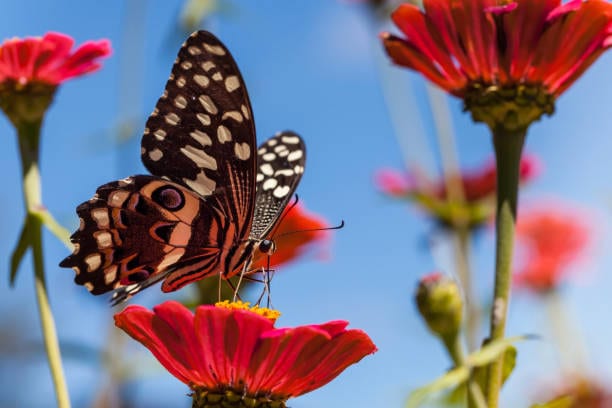
Butterflies are surprisingly good at keeping a record of change.
When temperatures and habitats shift, some species begin appearing in places where they were not previously recorded. Others retreat from parts of their old range. Some move higher up mountains.
Scientists have now assembled thousands of these changes into the largest global assessment of butterfly range shifts yet published.
A changing butterfly map
The study, published in Nature Ecology & Evolution on 5 August 2026, examined 6,182 records involving 1,758 butterfly species across 105 countries and territories. That covers roughly 10% of the world's described butterfly species.
Among species with documented changes, 80% expanded their ranges, 27% experienced contractions, and 22% shifted in elevation. Some experienced more than one type of change, so the figures overlap.
Climate change and extreme weather were associated with 79% of the documented range shifts.
Expansion may sound like good news, but finding suitable temperatures is only part of the puzzle. Butterflies also need the right vegetation, food plants and breeding habitat.
And sometimes their requirements are far stranger than that.
Some butterflies need ants
Certain South African blue butterflies have an extraordinary life cycle.
SANBI describes how caterpillars of some Lepidochrysops butterflies begin by feeding on plants. Later, an ant carries the caterpillar into its nest, where it feeds on the ants' brood before eventually emerging as a butterfly.
A species trying to establish itself somewhere new may therefore need much more than the right weather. The plants, habitat and sometimes even other insects it depends on have to be there too.
South African butterflies already contend with other pressures, including habitat loss, invasive alien plants, agriculture, grazing, drought and inappropriate fire management.
For some threatened Highveld species, even the timing of a fire can make a difference. SANBI records cases where burning during a butterfly's flight period could threaten populations.
Small insects, useful clues
Butterflies respond relatively quickly to temperature and environmental conditions. Their short life cycles make changes easier to detect than they are in many longer-lived animals.
A single unfamiliar butterfly proves very little. Records collected across years and thousands of locations can reveal where species are gaining ground, disappearing or moving higher.
And those records do not all have to come from professional scientists.
That butterfly photo could be useful
UCT's LepiMAP project collects photographic records of butterflies and moths from across Africa. Experts vet submissions, helping to build records of where species occur.
A photograph becomes much more useful when you keep:
Citizen observations have contributed to biodiversity mapping and conservation work alongside museum collections, surveys and specialist records.
So the butterfly photo sitting on your phone may be more than a nice picture.
The Bottom Line
Butterflies have been moving around the planet for a very long time. Scientists can now see those changes on a scale that was previously difficult to piece together.
What makes the story so intriguing is how much has to fall into place for a butterfly to thrive somewhere new. Temperature is only one part of it. Plants, habitat, and sometimes even ants are part of the same story.
And thousands of ordinary photographs can help scientists see where that story goes next. |
More from Joburg Insider

Sep 22, 2026
Privacy and access meet in the matric-results appeal
The Supreme Court of Appeal will hear a challenge over publishing results by examination number, with learners’ privacy and public access at the centre of the dispute.

Sep 22, 2026
More ways to get grant help
Online applications, WhatsApp support and free office Wi-Fi offer more ways to access grant services, while personal assistance remains available.

Sep 21, 2026
A chance paddle became a bigger ambition
The Gauteng kayaker has represented South Africa overseas and is developing her coaching skills alongside her own sporting ambitions.

Sep 21, 2026
Homemade carts take over Sandton Drive
The wild unpowered go kart race returns to Sandton Drive on 20 September 2026. Teams can still apply to compete.
0 Comments
Join the conversation
Be the first to comment
Share your thoughts above.