
Your Dog May Be Reading More From Your Face Than You Think |
New brain research shows dogs process human smiles differently and can distinguish fear from some other negative facial expressions. |
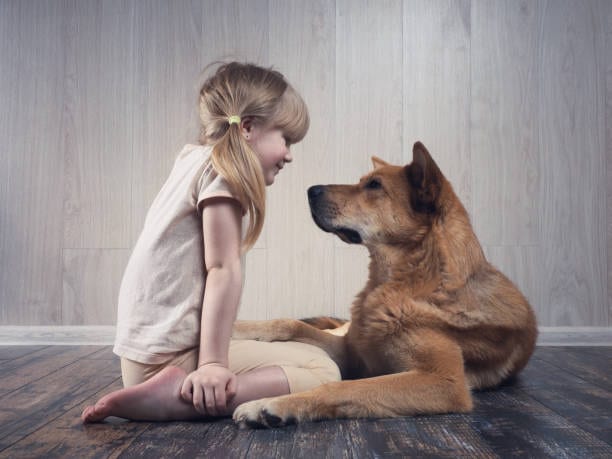
You know that look your dog gives you when something is wrong.
Maybe they come closer. Maybe they keep watching. Or perhaps they decide everything would improve considerably if you threw their favourite toy.
Scientists have now looked at what happens inside a dog's brain when it sees different human facial expressions.
And the results suggest our faces contain information dogs can tell apart.
What Happened Inside Their Brains?
Researchers used fMRI scans on awake, trained pet dogs while they looked at photographs of unfamiliar people.
In the first experiment, eight dogs saw happy and neutral faces. Happy faces produced stronger activity in areas including the temporal cortex and caudate nucleus, which are associated with higher-level processing and reward. Researchers say this suggests happy human faces may have particular emotional significance for dogs.
Then 12 dogs were shown faces expressing happiness, anger, fear and sadness.
The researchers could distinguish the brain response to happiness from the three negative expressions. Looking across the whole brain, they also found different patterns for:
This is important because it suggests dogs aren't simply separating human expressions into “positive” and “negative”. Their brains can distinguish between at least some different negative expressions.
Does Your Dog Know Exactly How You're Feeling?
Not necessarily.
The researchers aren't saying a dog looks at your face and thinks, “My human is sad.”
The finding is more precise: different human facial expressions can produce distinguishable patterns of activity in a dog's brain.
And real life gives dogs much more information than a photograph. They also respond to our voice, body language and scent.
One Important Catch
This was a small study. The second experiment involved only 12 dogs: eight Border Collies, three Golden Retrievers, and one mixed-breed dog.
They were also looking at still photographs of strangers rather than interacting naturally with their owners.
So the study doesn't prove that your dog knows exactly how you feel when you arrive home after a bad day.
What it does give researchers is something they haven't had before: direct evidence from inside the canine brain that dogs can distinguish between certain human facial expressions.
The Bottom Line
Dogs have spent thousands of years living alongside us, and we're still discovering just how closely tuned they are to human signals. This study suggests a smile isn't simply another face to a dog, and fear doesn't necessarily look the same to their brain as sadness or anger.
So when your dog studies your face, there may be more happening behind that look than we can see. |
More from Joburg Insider
Sep 22, 2026
Privacy and access meet in the matric-results appeal
The Supreme Court of Appeal will hear a challenge over publishing results by examination number, with learners’ privacy and public access at the centre of the dispute.

Sep 22, 2026
More ways to get grant help
Online applications, WhatsApp support and free office Wi-Fi offer more ways to access grant services, while personal assistance remains available.

Sep 21, 2026
A chance paddle became a bigger ambition
The Gauteng kayaker has represented South Africa overseas and is developing her coaching skills alongside her own sporting ambitions.

Sep 21, 2026
Homemade carts take over Sandton Drive
The wild unpowered go kart race returns to Sandton Drive on 20 September 2026. Teams can still apply to compete.
0 Comments
Join the conversation
Be the first to comment
Share your thoughts above.