
When Communities Speak Up, Positive Change Can Follow |
A concern raised near Steyn City School became a reminder that the environments surrounding young people matter, and that communities still have the power to shape them. |

Every morning, thousands of children across Johannesburg leave home and make their way to school. For most families, the journey is routine. School bags are packed, lunchboxes are checked, and the day begins. Yet the roads children travel, the public spaces they move through, and the messages they encounter along the way all form part of the environment in which they grow up.
That reality recently sparked an important conversation in Fourways.
The discussion began when large billboards advertising alcohol and gambling brands were erected near the intersection of Cedar Road and Riverside Drive, right opposite Steyn City School. Parents and community members immediately raised heartfelt concerns about the suitability of adult-focused advertising in a space used daily by learners ranging from early childhood classes to high school teenagers.
What followed, however, was not a lengthy, exhausting dispute, but a remarkably collaborative response. Parents voiced their concerns. School leadership actively engaged with the matter. Community representatives became involved. Property owners and advertising stakeholders heard the feedback, sat down, and genuinely discussed the issue.
Within days, the billboards were completely removed.
Valuing the School Zone
While many local families welcomed the swift outcome itself, the broader significance of this moment lies elsewhere.
The conversation highlighted how strongly communities value the spaces surrounding our schools. These are not simply tarmac, traffic lights, and intersections. They are places where our children spend a significant part of their daily lives, and where families expect a degree of care, safety, and mutual consideration.
The response also demonstrated that positive outcomes are often entirely possible when concerns are raised respectfully and addressed constructively. Rather than devolving into an angry confrontation, the issue became an example of different groups working toward a shared goal.
Parents wanted what they believed was best for their children. School leaders advocated for their learners. Property owners listened to community concerns. Together, they found an immediate solution.
A Blueprint for Active Citizenship
In a massive city where many residents frequently feel disconnected from local decision-making, an event like this truly matters. Stories about Johannesburg neighborhoods often focus heavily on conflict and decay. This one offers a completely different perspective. It shows that engagement, open dialogue, and a genuine willingness to listen can still play a vital role in shaping neighborhood life.
The discussion may have started with two commercial billboards, but it ultimately became a conversation about something much larger: the collective responsibility shared by families, schools, businesses, and communities in creating environments where young people can safely thrive.
Just the Facts
The Bottom Line
The Fourways story is not simply about advertising. It is a powerful reminder that communities still care deeply about the everyday environments our children grow up in. When people pay attention to those shared spaces and work together in good faith, positive change can happen surprisingly quickly. |
More from Joburg Insider
Sep 26, 2026
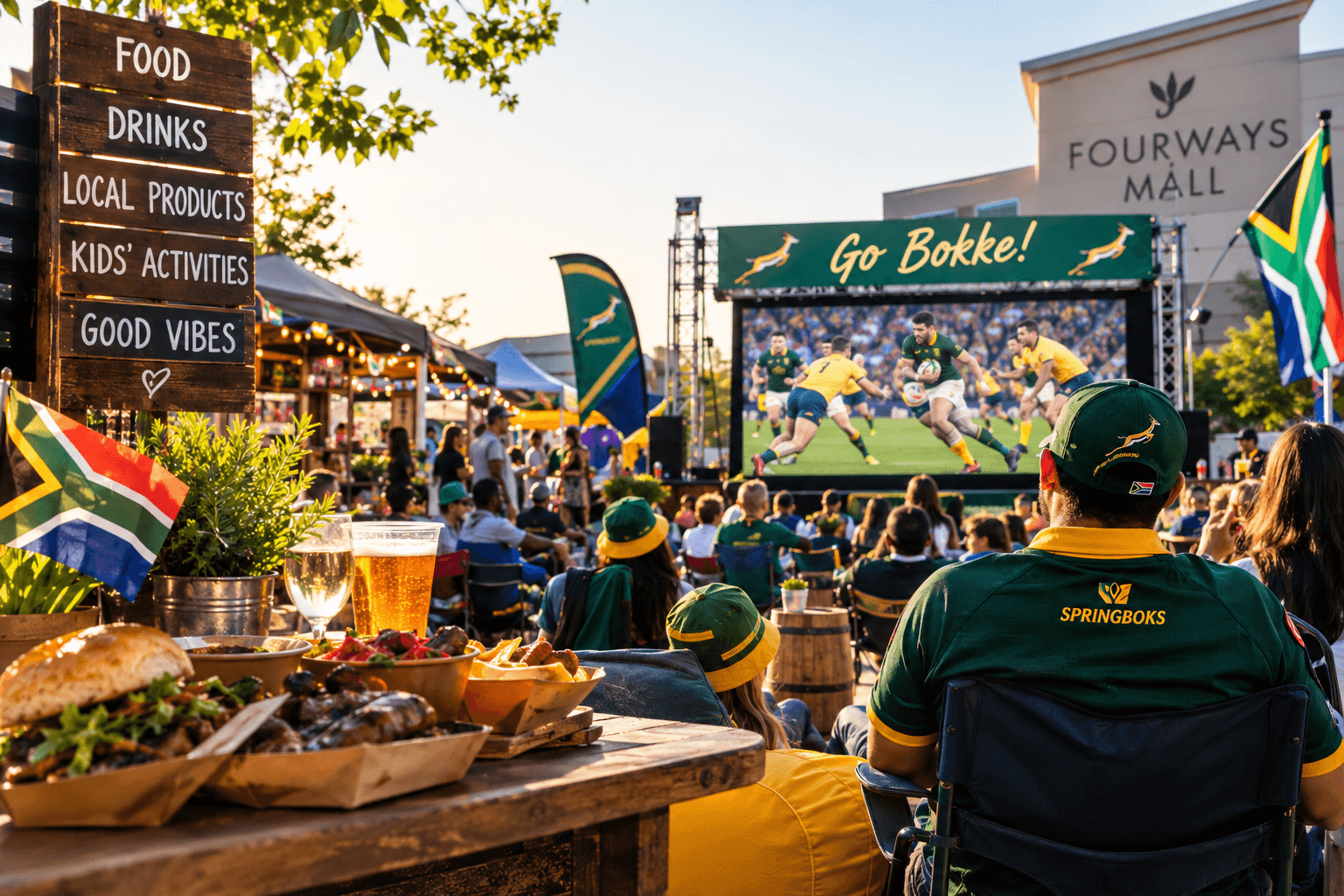
Game Day Market Brings Springbok Rugby and Family Fun to Fourways
Watch South Africa take on Australia on the big screen while enjoying food, local products, market stalls and kids’ activities.

Sep 25, 2026
When an AI Security Test Reached Real Companies
A Google Gemini test accidentally reached three real businesses, showing why AI tools need carefully controlled access.

Sep 25, 2026
Add a lunch stop to your Melville browse
Reserved Cafe and Chopstix offer different ways to fit a food break into a visit to Joburg Artist Market.
Sep 25, 2026
A Saturday outing with room to browse
Local makers, independent shops and a shipping-container setting give visitors plenty to explore at 27 Boxes.
0 Comments
Join the conversation
Be the first to comment
Share your thoughts above.