
There's 61c in Your Fuel Price You Probably Never Think About |
The government wants to change how South Africa's slate levy works behind the scenes. It won't automatically make filling up cheaper. |
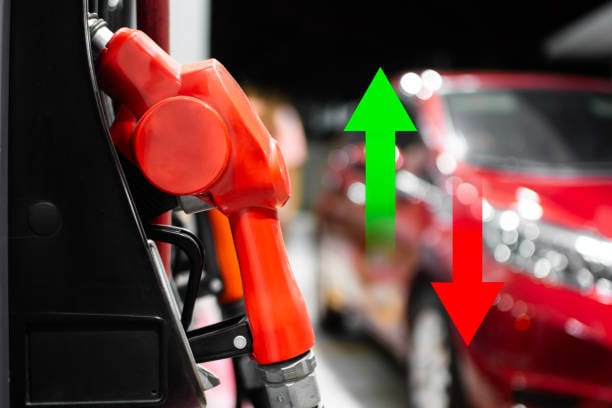
You watch the petrol price go up or down each month. Somewhere inside that price is a charge most motorists probably never think about.
Right now, it is 61.38 cents per litre.
It’s called the slate levy, and the Government has proposed changing how it handles the money it collects.
So what is the slate levy?
South Africa adjusts regulated fuel prices monthly, but international petroleum prices and the rand-dollar exchange rate move every day.
That creates a timing problem. Fuel companies can temporarily pay more to supply fuel than the regulated price allows them to recover.
The slate system tracks these under- and over-recoveries. When the cumulative deficit becomes sufficiently large, the slate levy helps recover that shortfall.
And recently, the numbers have been unusually large.
At the end of June, the combined petrol and diesel slate balance stood at negative R7.418 billion.
That 61c can move quickly
The slate levy isn't permanently fixed.
In July it was 113.94c/l. From 5 August, it dropped to 61.38c/l, a reduction of 52.56c/l.
That reduction helped the August petrol price, but it was only one part of the calculation.
Petrol fell by 52c/l in August, while wholesale diesel increased by between R1.23 and R1.38/l as other parts of the fuel-price formula moved in the opposite direction.
What does the Government want to change?
This is where the new proposal comes in.
Under the proposed amendment, when the cumulative negative slate balance exceeds the Department’s reimbursement threshold, the Minister could allow participating fuel companies to temporarily keep all or part of the slate levy they collect, instead of first paying that money to the Central Energy Fund.
The retained money would count towards reimbursing that company for its verified under-recovery. Reporting, reconciliation and auditing requirements would continue.
The temporary arrangement would end once the company’s verified under-recovery falls below R500 million, or earlier if the Minister directs it.
In simpler terms, it could shorten the route between collecting the money and using it to cover verified fuel-supply losses.
Will this make petrol cheaper?
Not directly.
The proposal changes how slate levy collections can be handled behind the scenes. It does not remove the slate levy or change the pump price itself.
It is also not final yet.
The proposed amendment was published in the Government Gazette on 17 August 2026, with comments open until 16 September 2026.
The Bottom Line
The 61.38c/l slate levy sitting inside August’s petrol and diesel price has a specific purpose: helping the fuel-pricing system deal with the gap between daily supply costs and South Africa’s monthly regulated prices.
The Government now wants to change how that money can reach fuel companies carrying large, verified under-recoveries.
It won’t automatically make your next tank cheaper. But the next time you see the petrol price broken down into all its little pieces, you’ll know what that slate levy is doing there. |
More from Joburg Insider
Nov 6, 2026
Answers Sought on Mayibuye Roadworks
Community leader raises congestion and emergency-access concerns over Sinamurula Street works.
Nov 5, 2026
A Longer-Term Plan for Lonehill Dam
Residents and specialists are exploring how better monitoring and sludge management could support the recovery of a northern Johannesburg landmark.
Nov 5, 2026
Put Bromhof’s Tin Road Market in Your Diary
The Tin Road Craft & Farmer’s Market offers food, local crafts and a family outing at Syringa Café this November.

Nov 5, 2026
Ballet Training Steps Into the Spotlight
The Russian School of Ballet’s Vaganova Showcase will take audiences inside the training process, from a dancer’s first formal exercises to advanced preparation.
0 Comments
Join the conversation
Be the first to comment
Share your thoughts above.