
Why Does Your Phone Never Stop Ringing? SA's Spam Problem Is Getting Worse |
Article Sub Headline |
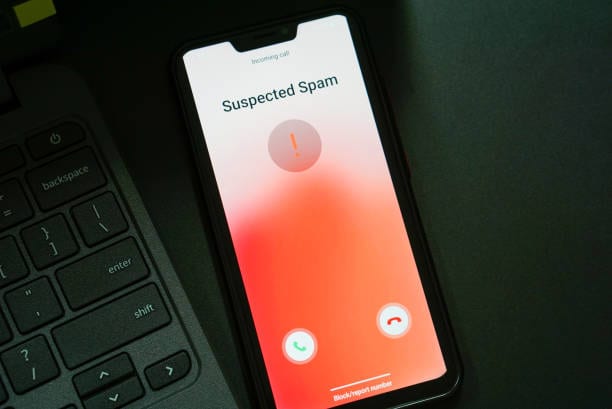
Your phone rings. It's an unfamiliar mobile number.
You ignore it.
Ten minutes later, another one calls.
For many South Africans, unwanted calls have become part of everyday life, and new figures suggest the problem is getting worse.
17.47 Billion Spam Calls in Six Months
Truecaller estimates that South Africa experienced 17.47 billion spam calls between January and June 2026, up 25.2% from the same period last year.
That's an estimate, not a count of every call made nationally. Truecaller uses spam reports and number-identification data from its South African users and scales that information to estimate the broader market.
The trend is nevertheless striking:
The unwanted callers range from aggressive telemarketers and robocalls to financial scammers.
Why Does Blocking Them Feel Useless?
Because the number on your screen isn't always the whole story.
Manipulation of calling-line information is a genuine problem in South Africa. In July 2026, ICASA sanctioned Session Telecoms following an investigation into breaches of the Numbering Plan Regulations. The original allegations included calling-line identification manipulation, call refiling and SIM-boxing. ICASA ultimately found contraventions involving invalid and improperly allocated numbers and imposed fines totalling R6 million.
For consumers, the practical lesson is simple:
A familiar-looking South African number doesn't prove that the caller is trustworthy.
Can Companies Keep Calling You?
Not necessarily.
Under POPIA, unsolicited electronic direct marketing is regulated. The Information Regulator's guidance makes clear that these rules extend to direct marketing by telephone.
If you're not already a customer, a company generally needs your consent before processing your personal information for unsolicited electronic direct marketing. It may approach you once to request that consent, provided you haven't previously withheld it.
Different rules apply to existing customers. A business may market its own similar products or services in certain circumstances, but you must be given a reasonable opportunity to object. Marketing communications must also provide a way to ask for them to stop.
South Africa also strengthened its consumer protections in April 2026, when amendments to the Consumer Protection Act regulations introduced additional measures aimed at unsolicited direct marketing and spam calls. The Information Regulator stressed that these changes do not replace POPIA's requirements.
What Can You Actually Do?
If the calls keep coming:
There is also a useful protection many people won't know about: where a request for direct-marketing consent is made by telephone, South Africa's amended POPIA regulations require the request to be electronically recorded, and that recording must be made available to you on request, free of charge.
Spam Call or Scam Call? There's a Difference
Not every annoying call is criminal.
A legitimate company making direct-marketing calls has to comply with South African privacy and consumer rules.
A scammer doesn't care whether you've opted out.
So if someone is asking for banking details, passwords, PINs or OTPs, don't try to unsubscribe. End the call.
The Bottom Line
If it feels as though your phone is receiving more unwanted calls, the latest figures suggest you're far from alone.
Truecaller estimates 17.47 billion spam calls hit South Africa in just the first six months of 2026.
South Africa has rules designed to control legitimate direct marketing, and those protections have been strengthened. But legislation won't make criminals respect an opt-out request.
Block the nuisance calls. But when a call feels suspicious, don't trust the number on your screen and don't hand over information.
Sometimes hanging up really is the smartest response. |
More from Joburg Insider
Sep 22, 2026
Privacy and access meet in the matric-results appeal
The Supreme Court of Appeal will hear a challenge over publishing results by examination number, with learners’ privacy and public access at the centre of the dispute.
Sep 22, 2026
More ways to get grant help
Online applications, WhatsApp support and free office Wi-Fi offer more ways to access grant services, while personal assistance remains available.

Sep 21, 2026
A chance paddle became a bigger ambition
The Gauteng kayaker has represented South Africa overseas and is developing her coaching skills alongside her own sporting ambitions.

Sep 21, 2026
Homemade carts take over Sandton Drive
The wild unpowered go kart race returns to Sandton Drive on 20 September 2026. Teams can still apply to compete.
0 Comments
Join the conversation
Be the first to comment
Share your thoughts above.