
Your Child Is Home. But Who Are They Talking to Online? |
Children can be sitting safely in their bedrooms while navigating social spaces their parents never see. South African schools are now stepping up online-safety training too. |
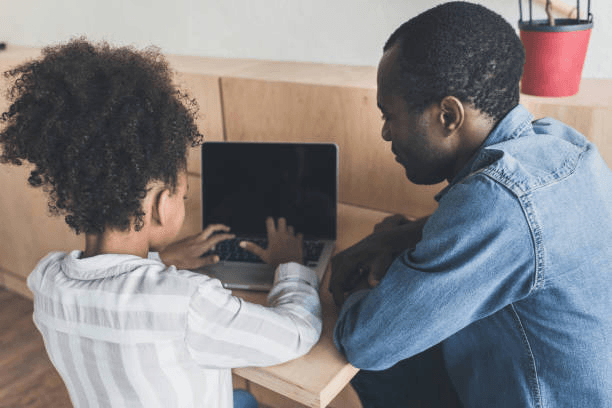
Keeping children safe used to feel more physical.
Know where they're going. Know who they're with. Teach them to cross the road, avoid strangers and come home when they're supposed to.
Today, a child can be sitting safely at home, talking, playing, and sharing with people their parents have never met.
The front door may be locked. The internet isn't.
Online Is Part of Childhood Now
For many children, being online isn't a separate activity. It's where they talk to friends, watch videos, play games, find information and increasingly encounter news.
South African research has already shown how embedded this has become. A UNICEF report drawing on the 2022 Disrupting Harm study found that 58% of the 1,639 internet-using South African children aged 9 to 17 surveyed used the internet at least once a day, with social media among their most popular activities. That brings opportunities.
It also creates risks that aren't always easy for a parent to see.
When a Stranger Doesn't Look Like a Stranger
Online risk doesn't necessarily begin with an obviously suspicious message.
Contact can start through gaming chats, messaging apps, social media or shared interests. A person can gradually build familiarity and trust without the child ever meeting them in real life.
Online grooming is sufficiently serious that it is specifically included in the Department of Basic Education's current online-safety training, alongside cyberbullying, sexting and online child sexual abuse and exploitation.
That is why simply checking how many hours a child spends on a phone isn't enough.
Who they interact with and what happens during that time matter too.
South African Schools Are Taking It More Seriously
This isn't only a conversation happening in other countries.
South Africa's Department of Basic Education is strengthening its Online Safety Integrated Programme, working with organisations including UNICEF, the Film and Publication Board, the Department of Communications and Digital Technologies and Google.
The programme is training educators to recognise and respond to digital harms and help learners build safer digital habits.
This month, it reached Johannesburg directly: Grades 8–12 Life Orientation educators in the Gauteng Johannesburg Region received training.
The DBE describes protecting children online as a shared responsibility involving government, schools, parents, communities and technology platforms.
Five Conversations Worth Having at Home
Parents don't need to understand every new app their children discover.
A few principles travel quite well from one platform to the next:
These shouldn't be one big, frightening internet-safety lecture. They work better as conversations that happen regularly as children grow and the technology around them changes.
The Bottom Line
Parents aren't going to see every message, gaming chat or social-media interaction their children have.
Schools can't either.
That's why online safety increasingly comes down to giving children enough awareness to recognise when an ordinary interaction starts becoming uncomfortable or unsafe, and enough trust to tell someone when it does.
South African schools are now putting more emphasis on those skills.
The goal isn't to make children afraid of the internet. It's to make sure they don't have to navigate it alone. |
More from Joburg Insider

Sep 26, 2026
Game Day Market Brings Springbok Rugby and Family Fun to Fourways
Watch South Africa take on Australia on the big screen while enjoying food, local products, market stalls and kids’ activities.

Sep 25, 2026
When an AI Security Test Reached Real Companies
A Google Gemini test accidentally reached three real businesses, showing why AI tools need carefully controlled access.

Sep 25, 2026
Add a lunch stop to your Melville browse
Reserved Cafe and Chopstix offer different ways to fit a food break into a visit to Joburg Artist Market.
Sep 25, 2026
A Saturday outing with room to browse
Local makers, independent shops and a shipping-container setting give visitors plenty to explore at 27 Boxes.
0 Comments
Join the conversation
Be the first to comment
Share your thoughts above.