
Potjiekos: Good Food Takes Its Time |
From slow-cooked beef to seafood and vegetables, the pleasure of a potjie starts with choosing what goes into the pot. |
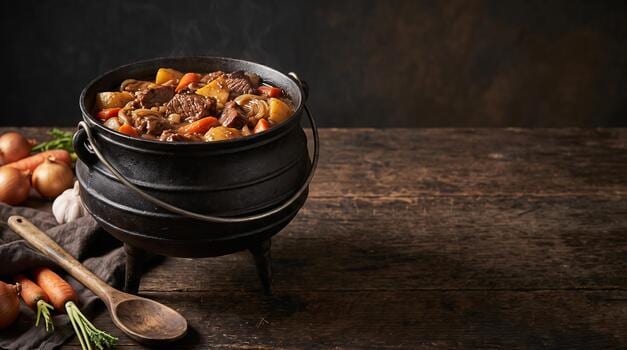
A potjie invites a different kind of lunch. Choose a slow-cooking cut, and the meal needs an afternoon, giving the gathering time to unfold while the food cooks.
But there is no single potjiekos recipe. Beef, lamb, chicken, seafood and vegetables all have a place, with different cooking times and methods. The shared starting point is the familiar cast-iron pot and food cooked over controlled heat.
A Little Pot With a Familiar Name
The name comes from Afrikaans: potjie means “little pot”, and kos means “food”. The Dictionary of South African English describes potjiekos as a stew cooked in a three-legged cast-iron pot over an open fire.
That description leaves plenty of room for individual tastes. A rich, slow-cooked meat potjie and a lighter seafood version can share the same cooking vessel without needing the same treatment.
Why Some Cuts Need Patience
Shin and oxtail suit slow, moist cooking. These cuts contain connective tissue, including collagen, which gradually softens and turns into gelatin during cooking. This helps explain how meat that starts firm can become tender, with a sauce that has more body.
Choose the cut before deciding when lunch will be served. Seafood and vegetables should not spend the same hours simmering as oxtail.
A few habits help:
Must You Never Stir?
Layering is part of many traditional potjies, but “never stir” is not a rule that fits every recipe.
Some methods call for frying onions, mixing a sauce or combining ingredients before the final simmer. Follow the chosen recipe rather than treating every potjie as an identical stack of meat and vegetables.
A Recipe Worth Trying: Shin and Oxtail
Ina Paarman’s shin-and-oxtail beef potjie, serving five to six, takes a two-stage approach.
The meat is browned and gently cooked until tender. A separate finishing stage adds small onions, tomato sauce, cloves, and bay leaves. Parsley, lemon zest and garlic form a fresh topping, known as gremolata.
It is a useful example of a potjie built around tenderness first, with finishing flavours added later. The recipe suggests serving it with pap and a salad. Find the quantities and complete method in Ina Paarman’s original recipe.
The Bottom Line
A good potjie begins with a recipe suited to your ingredients and the time available. Keep the heat manageable, let each ingredient cook as intended and give a slow-cooking cut the patience it needs.
The pot may be small. The meal need not be rushed. |
More from Joburg Insider

Nov 13, 2026
The Flying Robot With Real Feathers
Birds change their wing shape in flight. Researchers are building feathered robots to understand how they do it.

Nov 13, 2026
Check Before You Change Your Salt
Potassium-enriched salt can help lower blood pressure, but kidney health, medication and who shares your meals must be considered before switching.

Nov 12, 2026
A Smarter Approach to Geyser Savings
A suitable heating schedule can help, but using less hot water and fixing avoidable waste deserve attention too.

Nov 12, 2026
Travel Prepared, Recognise Symptoms Early
Cases diagnosed in Gauteng are mostly linked to travel. Check your destination’s risk before you leave, and take symptoms seriously when you return home.
0 Comments
Join the conversation
Be the first to comment
Share your thoughts above.