
Bees Can Solve Problems Using Tools, New Study Finds |
Unveiling the Genius of Bees: How They Use Tools to Problem-Solve |
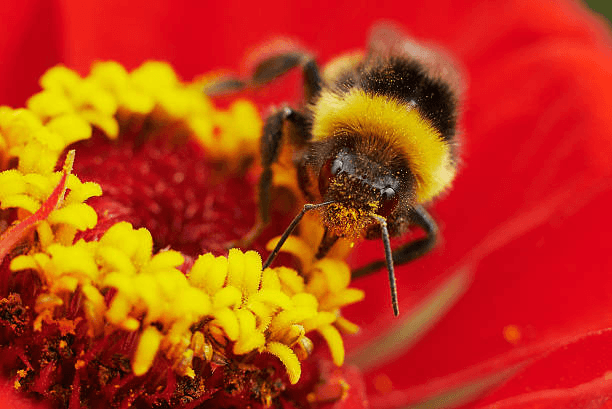
For years, animals such as chimpanzees, elephants and crows have been recognised for their ability to use tools to solve problems. Now, researchers have added an unexpected new member to that list: the humble bumblebee.
A new study published in the journal Science found that bumblebees can use simple tools to reach food, demonstrating a level of problem-solving ability that scientists once believed was limited to animals with much larger brains.
A Tiny Brain, Big Thinking
In the study, researchers challenged bumblebees with an obstacle that prevented them from reaching a sugary reward.
Instead of giving up, many of the bees figured out how to roll a small polystyrene ball into position before climbing onto it to reach an artificial flower suspended above them. The insects had never been trained to perform the task, making the behaviour particularly significant. Around 75% of the bees successfully solved the challenge on their own.
To test whether the bees were simply acting by chance, researchers made the task more difficult by hiding the flower from view. Even then, many of the bees remembered where the reward had been and correctly positioned the ball beneath it, suggesting they were relying on memory and planning rather than trial and error.
Changing the Way We Think About Insects
The findings challenge the long-held belief that insects operate almost entirely on instinct.
Scientists say the research demonstrates that even animals with extremely small brains are capable of flexible thinking and can develop solutions to unfamiliar problems. Rather than following fixed behaviours, the bees adapted to a completely new situation using an object as a tool to achieve their goal.
The study also builds on previous research showing that bees can count, learn from one another and remember locations, painting a far more complex picture of insect intelligence than previously understood.
Why It Matters
Bees play a vital role as pollinators, supporting ecosystems and many of the crops that people rely on for food. Understanding how they learn, adapt and solve problems could help scientists develop new approaches to conserving bee populations as they face increasing environmental pressures.
The discovery also reminds us that intelligence isn't measured by brain size alone. Sometimes, remarkable problem-solving abilities can be found in the smallest of creatures.
What You Need to Know
The Bottom Line
Bumblebees have long been recognised for their importance as pollinators. Now, they are also gaining recognition for their surprising intelligence. By demonstrating their ability to use tools and solve unfamiliar problems, these tiny insects are reshaping scientists' understanding of how complex animal behaviour can be, even with brains no bigger than a seed. |
More from Joburg Insider

Sep 22, 2026
Privacy and access meet in the matric-results appeal
The Supreme Court of Appeal will hear a challenge over publishing results by examination number, with learners’ privacy and public access at the centre of the dispute.

Sep 22, 2026
More ways to get grant help
Online applications, WhatsApp support and free office Wi-Fi offer more ways to access grant services, while personal assistance remains available.

Sep 21, 2026
A chance paddle became a bigger ambition
The Gauteng kayaker has represented South Africa overseas and is developing her coaching skills alongside her own sporting ambitions.

Sep 21, 2026
Homemade carts take over Sandton Drive
The wild unpowered go kart race returns to Sandton Drive on 20 September 2026. Teams can still apply to compete.
0 Comments
Join the conversation
Be the first to comment
Share your thoughts above.